
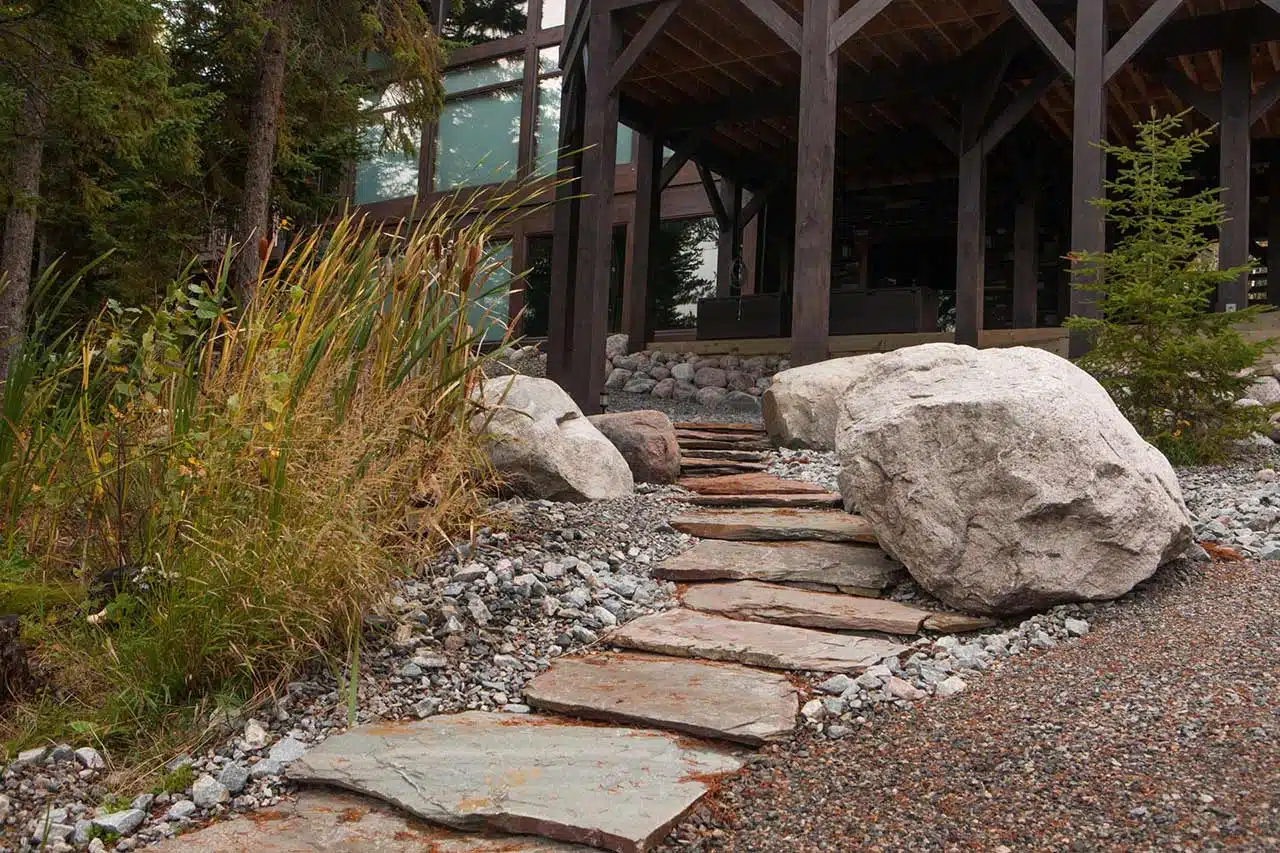
Rock landscaping is one of the most effective ways to add structure, texture, and visual appeal to an outdoor space. When planned properly, rocks can frame a front yard, define a backyard patio, soften hard edges, and create a more natural look across the whole landscape.
For Winnipeg homeowners, using rocks for landscaping can also be practical. The right stones can support planting beds, pathways, elevation changes, and low maintenance areas that still feel polished and intentional. At North Coral Landscaping, rock landscaping is not treated as filler. It is part of the overall landscape design.
Selecting the Right Rocks for Landscaping
Choosing the right landscaping rocks starts with the purpose of the space. A front yard feature bed may need curb appeal and clean lines. A backyard walkway may need crushed stone, stepping stones, or larger rocks placed along the border. A sloped yard may need a stronger retaining structure rather than a simple decorative wall.
North Coral Landscaping uses local Manitoba rocks whenever possible, helping each project feel connected to the surrounding landscape. Colour, size, shape, and texture all matter. Smooth river rocks create a different feeling than jagged edges or rough natural boulders. Smaller rocks can add detail, while large boulders create weight and structure.
Common rock features include:
- Large boulders for focal points and natural structure
- Crushed stone or gravel for pathways and transitions
- River rocks for decorative beds and drainage-friendly accents
- Stepping stones for movement through a garden or side yard
- Natural stone walls for raised beds, borders, and elevation changes
The best landscaping rocks are not chosen just because they look good in a sample pile. They need to suit the yard, the home, the grade, and the long-term use of the space.
Rock Walls and Retaining Structures
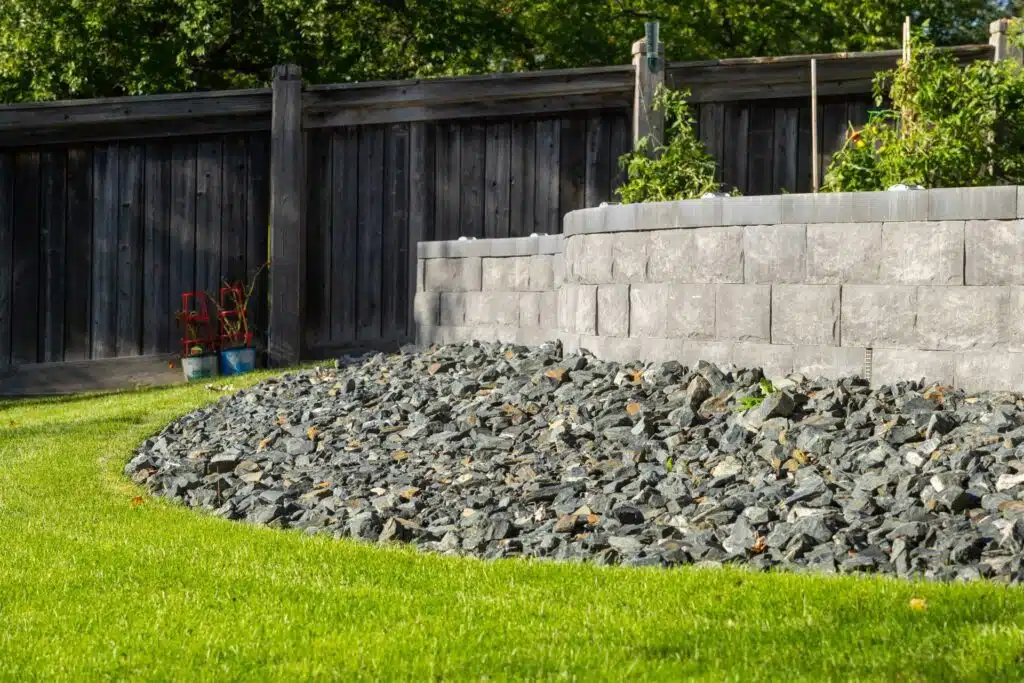
Rock walls are one of the strongest ways to add depth to a landscape. They can create raised garden beds, define outdoor rooms, frame a patio, or help manage a slope. But not every rock wall is the same.
A decorative wall may be used to create visual interest or divide one area from another. A retaining structure has a more functional role because it may need to hold back soil, support grade changes, or help create usable space on uneven ground.
This is where planning matters. A retaining wall needs more than stacked stones. The base, drainage, height, material choice, and surrounding soil all affect how it performs in the long run. In Winnipeg, where yards deal with spring melt, heavy rain, shifting soil, and freeze-thaw cycles, proper construction is not optional.
North Coral’s gallery shows this kind of structural thinking in projects like Lynacre, where a curved stone wall helped give the backyard more definition and flow. The Niizhoziibean community project also shows larger-scale stonework, including gabion retaining structures, pathways, boulders, and a limestone ring.
Creating Rock Gardens
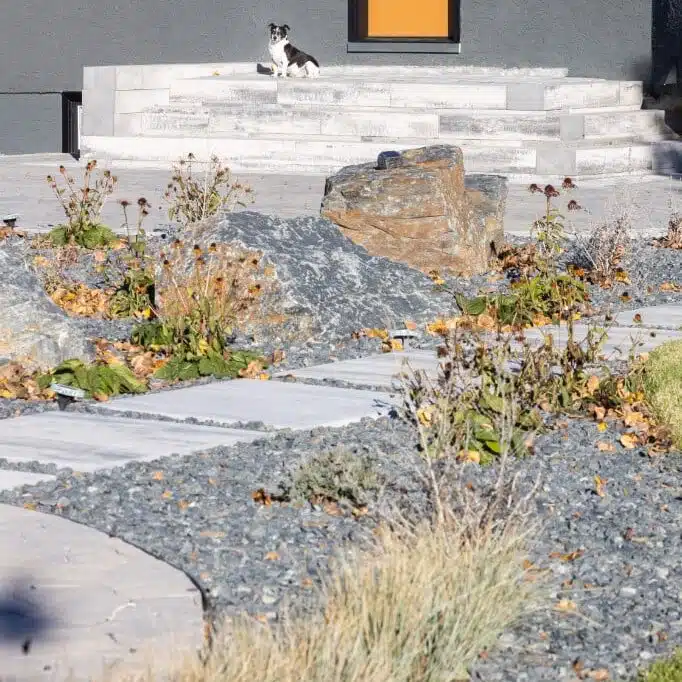
A rock garden should feel balanced, not like a pile of stones shoved into a corner because someone got carried away at the supply yard. The strongest rock gardens combine texture, shape, and spacing so the finished area feels intentional.
Rock planting beds can work well in both small and large spaces. In a front yard, they can improve curb appeal and reduce empty lawn areas. In a backyard, they can frame patios, fences, seating areas, or walkways. They can also create more texture around custom planting beds.
North Coral’s rock features and planting beds are designed to add vitality, allure, and function to outdoor spaces. The goal is to make the yard feel more complete while still matching the home and the surrounding property.
To keep a rock garden from looking flat, it helps to vary the size and placement of the rocks. Larger rocks can anchor the design, while smaller stones or gravel can fill transitions. Curved edges, layered beds, and natural spacing usually feel softer than rigid lines, although clean lines can work beautifully for modern homes.
Large boulders can act as natural sculpture in a landscape. When arranged properly, they add interest without needing much else around them. They are especially useful in front yard beds, backyard patios, and areas where the landscape needs a strong focal point.
The trick is placement. A boulder should look settled into the ground, not perched on top like it is waiting for a strong wind to embarrass everyone. Larger rocks often look more natural when they are partly integrated into the bed, surrounded by smaller rocks, or placed near a change in grade.
Drainage, Grade, and Long-Term Performance
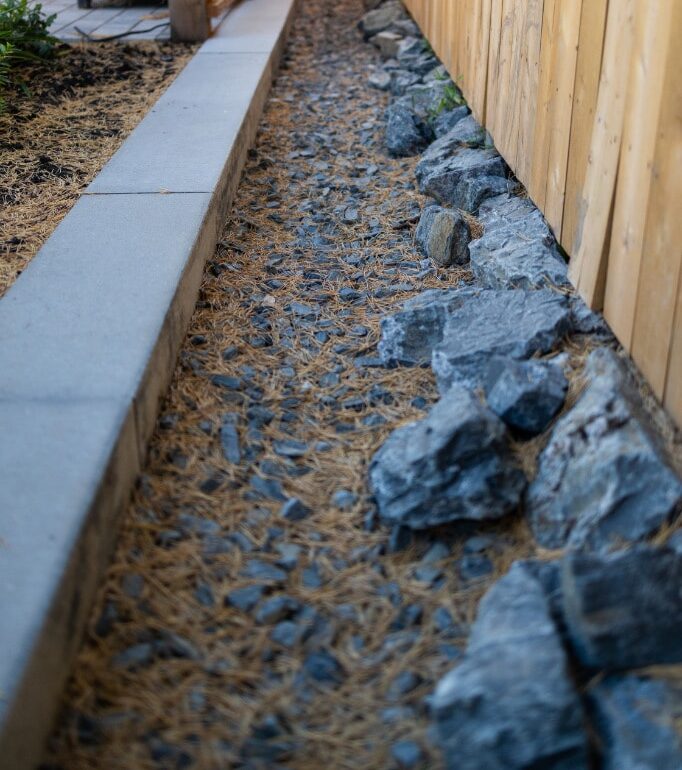
Rock landscaping should never be treated as decoration only. Rocks, gravel, pathways, and retaining structures all interact with water and soil. If water collects in the wrong place, it can affect beds, walls, walkways, and nearby structures.
In Winnipeg, drainage and grading need to be considered before rock features are installed. Spring melt and heavy rain can reveal problems quickly. A well-planned rock landscape should work with the way water moves through the yard, not fight against it.
This is especially important for retaining structures, sloped areas, low spots, and rock beds near the house. Good design considers the site before choosing materials.
Maintenance
Rock landscapes are often low maintenance, but they are not no maintenance. Leaves, weeds, debris, and shifting stones still need attention. Walkways may settle over time, gravel may need refreshing, and walls or borders should be checked after major weather changes.
Basic maintenance includes clearing debris, keeping edges tidy, checking for movement, and making sure water can still move away from important areas. A little care keeps the space looking clean and helps protect the investment.
Rock Landscaping Project Inspiration
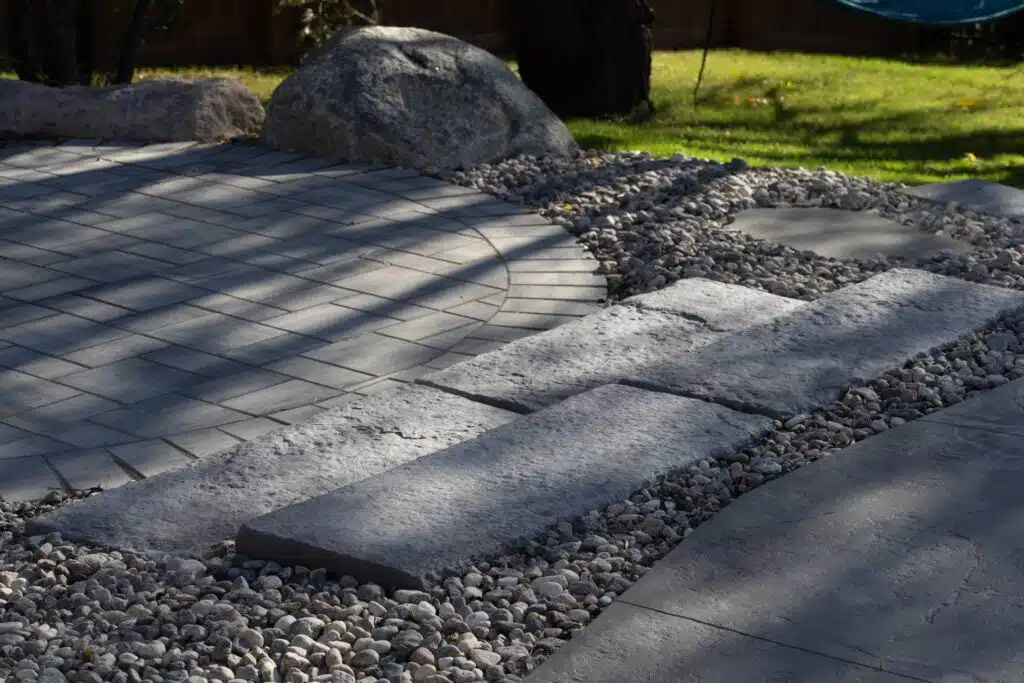
North Coral’s gallery includes several examples of rock landscaping used in real Winnipeg and Manitoba projects. Lynacre shows how a stone wall can bring structure and calm to a backyard. Chornick shows how a curved stone walkway can improve front yard flow and curb appeal. Niizhoziibean shows larger-scale stonework, including pathways, boulders, gabion retaining structures, and a limestone ring.
These projects show that rocks are not just decorative extras. When used properly, they help shape the entire landscape.
Bring More Depth to Your Outdoor Space
Rock landscaping can add texture, structure, and long-term value to your yard. Whether you are planning a front yard refresh, a backyard walkway, a rock garden, or a retaining wall, the best results come from choosing the right materials and designing them around the property.
At North Coral Landscaping, we take time to select the right stones, plan each feature carefully, and create outdoor spaces that feel connected to the home and the natural character of Manitoba.
Contact North Coral Landscaping today to book your free consultation.